
Hawk Ridge Animal Hospital
Advanced Pet Surgery
Advanced pet surgeries are specialized procedures used to treat complex medical or orthopedic conditions, helping restore function, relieve pain, and improve a pet’s quality of life.
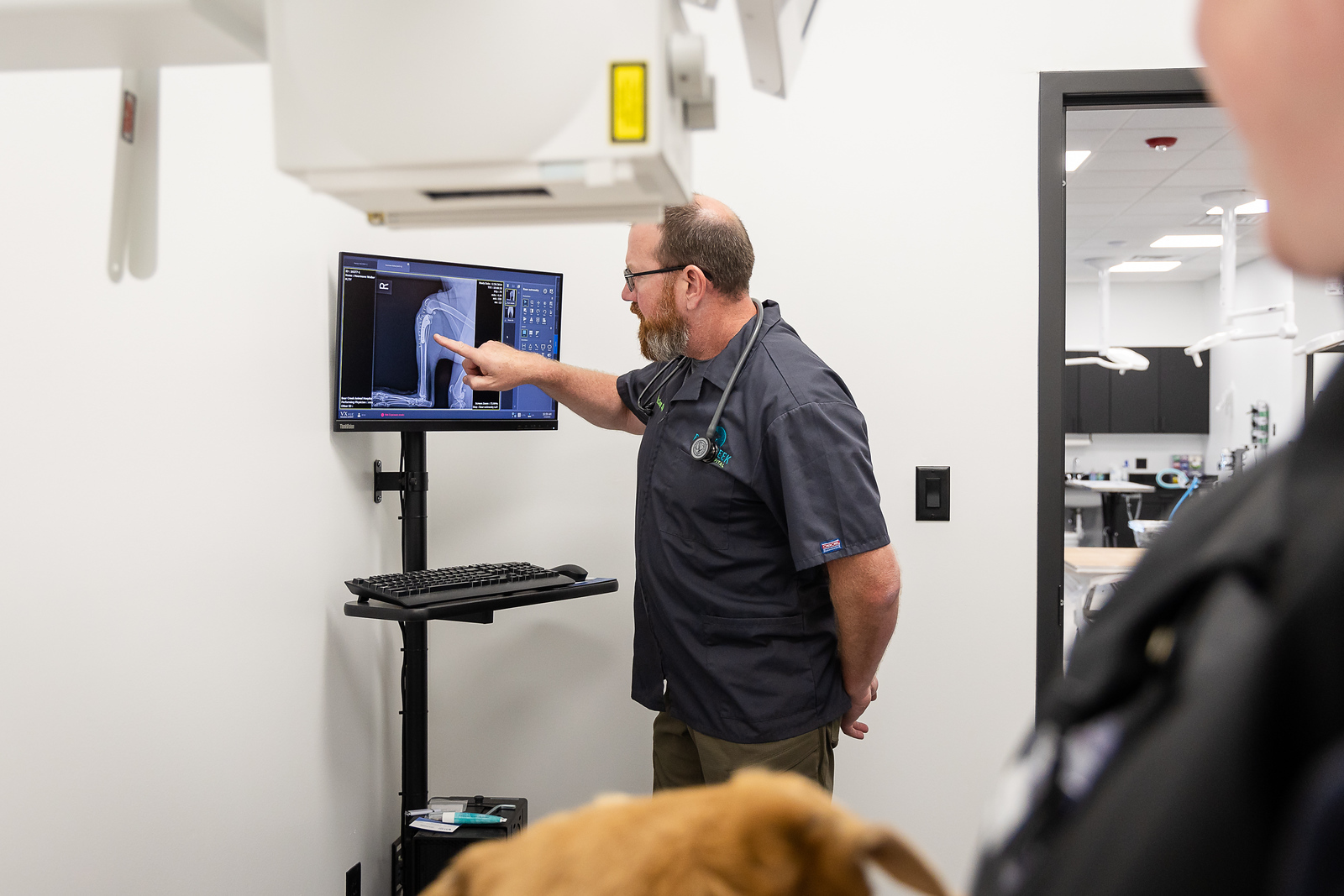
Advanced Pet Surgical Procedures in St. Louis
Advanced pet surgical procedures are specialized operations performed by our veterinarians to treat serious orthopedic and musculoskeletal conditions. Common examples include TPLO (Tibial Plateau Leveling Osteotomy) for dogs with torn cranial cruciate ligaments, FHO (Femoral Head Ostectomy) to relieve hip pain from severe arthritis or injury, and MPL (Medial Patellar Luxation) surgery to correct dislocated kneecaps.
TPLO (Tibial Plateau Leveling Osteotomy)
TPLO surgery involves cutting and rotating the tibial plateau (top of the shin bone) to change the angle at which the femur meets the tibia. This stabilizes the knee joint without relying on the damaged ligament. A metal plate and screws are then used to secure the bone in its new position as it heals.
TPLO is typically recommended for:
- Medium to large breed dogs
- Active pets
- Dogs with partial or complete CCL tears
Unlike techniques that try to replace or mimic the torn ligament, TPLO changes the biomechanics of the joint so that the ligament is no longer needed to maintain stability.
Benefits:
- Excellent outcomes in large/active dogs
- Quicker return to function
- Reduced arthritis progression
Femoral Head Ostectomy (FHO)
FHO is a surgical procedure commonly performed on pets—especially dogs and cats—to alleviate pain in the hip joint caused by conditions such as severe hip dysplasia, fractures, dislocations, or arthritis. In this procedure, the femoral head, which is the “ball” part of the ball-and-socket hip joint, is surgically removed. This eliminates bone-on-bone contact, which is the primary source of pain.
After the femoral head is removed, the body naturally forms a “false joint” made of scar tissue and surrounding muscles, allowing the pet to regain pain-free mobility over time. While the new joint won’t have the same range of motion as a normal hip, most pets—especially smaller dogs and cats—can return to normal activity levels with minimal long-term effects.
FHO is often chosen when total hip replacement is not feasible due to cost, size of the pet, or the severity of the condition.
Postoperative care typically includes:
- Pain management
- Physical therapy
- Controlled activity to encourage proper healing and muscle development.
With proper rehabilitation, many pets go on to live active, comfortable lives after FHO surgery.
Femoral Head Ostectomy (FHO)
FHO is a surgical procedure commonly performed on pets—especially dogs and cats—to alleviate pain in the hip joint caused by conditions such as severe hip dysplasia, fractures, dislocations, or arthritis. In this procedure, the femoral head, which is the “ball” part of the ball-and-socket hip joint, is surgically removed. This eliminates bone-on-bone contact, which is the primary source of pain.
After the femoral head is removed, the body naturally forms a “false joint” made of scar tissue and surrounding muscles, allowing the pet to regain pain-free mobility over time. While the new joint won’t have the same range of motion as a normal hip, most pets—especially smaller dogs and cats—can return to normal activity levels with minimal long-term effects.
FHO is often chosen when total hip replacement is not feasible due to cost, size of the pet, or the severity of the condition.
Postoperative care typically includes:
- Pain management
- Physical therapy
- Controlled activity to encourage proper healing and muscle development.
With proper rehabilitation, many pets go on to live active, comfortable lives after FHO surgery.
MPL (Medial Patellar Luxation)
MPL is a common orthopedic condition in pets, especially small dog breeds, where the kneecap (patella) slips out of its normal groove and causes discomfort, lameness, or an abnormal gait. If left untreated, MPL can lead to joint damage, arthritis, and chronic pain. MPL surgery is designed to realign the patella and stabilize the knee, helping to restore normal function and prevent further injury.
We offer advanced MPL surgical correction tailored to your pet’s specific needs. The procedure may involve deepening the femoral groove, tightening soft tissues, or repositioning bone structures to keep the kneecap securely in place.
Most pets recover well with proper post-operative care, including rest, physical therapy, and gradual return to activity.
Lateral Suture Repair
Lateral suture repair is a common surgical technique used to treat cranial cruciate ligament (CCL) tears in dogs, which are similar to ACL injuries in humans. This procedure is especially effective for small to medium-sized dogs and involves placing a strong, synthetic suture on the outside of the knee joint to stabilize it and mimic the function of the damaged ligament.
During surgery, the torn ligament is removed, and the suture is anchored to the surrounding bone to prevent abnormal movement in the joint. Over time, scar tissue develops to further support the knee, allowing for improved stability and mobility.
With proper post-operative care—including rest, pain management, and rehabilitation—most pets regain full use of the leg and return to an active lifestyle.
Fracture Repair & Amputations
Hawk Ridge Animal Hospital provides expert surgical care for pets with serious injuries, including fracture repair and, when necessary, limb amputation. Whether caused by trauma, accidents, or underlying medical conditions, these procedures are designed to relieve pain, restore mobility, and give your pet the best chance at a healthy, active life.
Fracture repair involves stabilizing broken bones using techniques such as pins, plates, screws, or external fixators. Each case is carefully evaluated to determine the best surgical approach for proper alignment and healing. Our team will guide you through the recovery process, including pain management, rest, and rehabilitation.
In some cases, a severely damaged or diseased limb may not be repairable. Limb amputation is a compassionate option that can greatly improve quality of life when other treatments are not viable. Pets adapt remarkably well to life on three legs and often return to normal activity levels with time and support.
Schedule Your Consultation Today!
If your pet is showing signs of orthopedic discomfort—such as limping, knee pain, or other mobility issues—reach out to us today. Our compassionate team is ready to guide you through every step of your pet’s care and provide the support you need. Schedule a consultation and take the first step toward improving your pet’s comfort, mobility, and overall well-being.
